

Indian schools in 2026 are moving beyond basic digitization and toward connected systems that support teaching, administration, and student development. From NEP 2020 implementation to AI-enabled classrooms, the shift is making education ERP platforms and a modern learning management system for schools more relevant than ever. This article explores how digital transformation is reshaping Indian education in practical, learning-focused ways.
If you walked into a typical Indian classroom ten years ago, you’d find the familiar scent of chalk dust, heavy wooden benches, and the rhythmic scratching of pens against paper. Fast forward to mid-April 2026, and while the spirit of learning remains the same, the "hardware" of our schools has undergone a radical makeover.
We aren't just talking about replacing blackboards with whiteboards. We’re talking about a full-scale digital evolution that is changing how principals lead, how teachers teach, and: most importantly: how students grow.
As we navigate through 2026, the conversation has shifted from "Should we use technology?" to "How can we use technology to make education more human?" If you’re a school administrator or a trustee looking at the current landscape, you know the pressure is on to not just keep up, but to lead.
Let's dive into the current state of digital transformation in Indian schools and see how things are actually looking on the ground.
The NEP 2020 Catalyst: From Policy to Practice
We’ve been talking about the National Education Policy (NEP) 2020 for years, but 2026 is the year where the rubber has truly met the road. The policy's emphasis on moving away from "rote learning" toward "holistic development" has made traditional paper-based record-keeping nearly impossible to maintain.
Why NEP 2020 is pushing schools toward connected platforms
One of the biggest shifts has been the 360-degree assessment. Gone are the days when a student's entire worth was measured by a three-hour math exam in March. Today, the "Holistic Progress Card" takes center stage. It tracks cognitive, affective, and psychomotor domains. For a school leader, managing this manually for 2,000 students is a nightmare. This is where an integrated education ERP becomes less of a luxury and more of a survival tool. It allows schools to capture peer feedback, self-assessments, and project-based milestones in real time, creating a living document of a child's growth.
A well-designed learning management system for schools can support this shift by connecting classroom activity with broader academic records. Instead of storing teaching data in one place and administrative data in another, schools can create a more complete picture of student progress.
A few practical outcomes of this shift include:
- Better tracking of holistic development
- Easier documentation for teachers and coordinators
- Faster parent communication
- More reliable academic records for school leadership

Operation Digital Board and the Rise of the Smart Campus
The Indian government's "Operation Digital Board" initiative has significantly matured. We’ve seen thousands of secondary and higher secondary schools across the country receive smart boards that serve as windows to the world. But a "smart campus" in 2026 goes beyond just having a screen in the room.
What a smart campus actually looks like
It’s about Smart Campus Governance. This means that the school’s attendance, fee collection, library management, and even the canteen are all part of a single, unified digital ecosystem. States like Gujarat and Assam have set incredible benchmarks here. Gujarat’s Vidya Samiksha Kendra (VSK) and Assam’s Shiksha Setu platform have shown that when you centralize data, you can make better decisions for every single student.
By using centralized data platforms, administrators can see early warning signs: like a drop in attendance or a sudden dip in grades: and intervene before a student falls behind. This proactive approach to education is the hallmark of the 2026 school system.
In many cases, this is where an education ERP and a learning management system for schools start working best together. One helps manage institutional operations, while the other supports teaching and learning workflows in a more structured way.
AI-Driven Pedagogy: The Teacher’s New Co-Pilot
There was a time when teachers feared AI would replace them. In 2026, that fear has largely been debunked. Instead, AI has become the ultimate teaching assistant.
How AI is changing classroom delivery
With the recent rollout of AI pilots in over 10,000 schools across India, teachers are using AI-native tools to create personalized lesson plans. Imagine a classroom where every student is working at their own pace. While Student A is mastering fractions through a gamified module, Student B is being challenged with advanced algebraic concepts: all managed through a single learning management system for schools.
When this kind of classroom experience is connected to an education ERP, schools can do more than deliver lessons. They can also track participation, monitor outcomes, and connect academic insights with attendance, reporting, and parent communication.
AI tools are now capable of:
- Predictive Analytics: Identifying which students might struggle with an upcoming concept based on their past performance.
- Automated Grading: Freeing up teachers from hours of manual checking so they can focus on what they do best: mentoring and inspiring.
- Adaptive Content: Adjusting the difficulty level of homework in real time based on how the student is responding.

Breaking the Digital Divide: Challenges Still Remain
While the transformation is exciting, we have to be honest about the hurdles. As of 2026, the "digital divide" hasn't vanished, but the bridge is being built. Current data suggests that while private schools in urban hubs like Delhi or Bengaluru have almost 100% tech integration, many rural schools are still catching up with basic ICT (Information and Communication Technology) labs.
Why mobile-first access matters
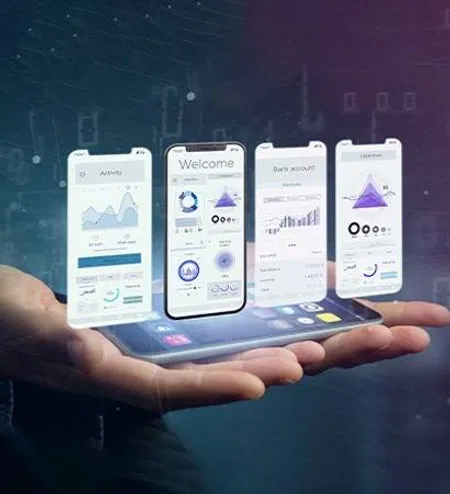
However, the push for "Mobile-First" education has been a game-changer. Since almost every household in India now has access to a smartphone, the school is no longer confined to the four walls of the building. A robust education ERP now includes a comprehensive mobile app that keeps parents in the loop, regardless of their location. Whether it’s paying fees, checking a child’s progress, or receiving urgent notifications, the smartphone has become the primary link between the home and the school.
For many institutions, a mobile-enabled learning management system for schools also helps extend learning beyond campus by giving students and parents easier access to assignments, updates, and classroom resources.
Security and Ethics: The New Frontier
With all this data floating around: grades, attendance, behavioral notes, and even health records: data security has become a top priority for school boards. In 2026, school trustees are asking more questions about data privacy than ever before.
What schools should evaluate in digital systems
They aren't just looking for software; they are looking for partners who adhere to international standards. This is where certifications like ISO 27001:2022 come into play. A school’s reputation is built on trust, and in the digital age, that trust is digital. Ensuring that student data is encrypted and protected against breaches is a non-negotiable part of modern school management.
When evaluating an education ERP or a learning management system for schools, decision-makers often look for:
- Strong data encryption
- Role-based access controls
- Multi-factor authentication
- Regular backups and audit trails
- Clear data privacy practices
(Spoiler alert: If your current system doesn't have multi-factor authentication, it's time for an upgrade!)
Why Integrated Systems are the "Secret Sauce"
You might have a great app for fees, another for attendance, and a separate one for the library. But if they don’t talk to each other, you don’t have a smart school; you have a digital headache.
The value of connecting operations and learning
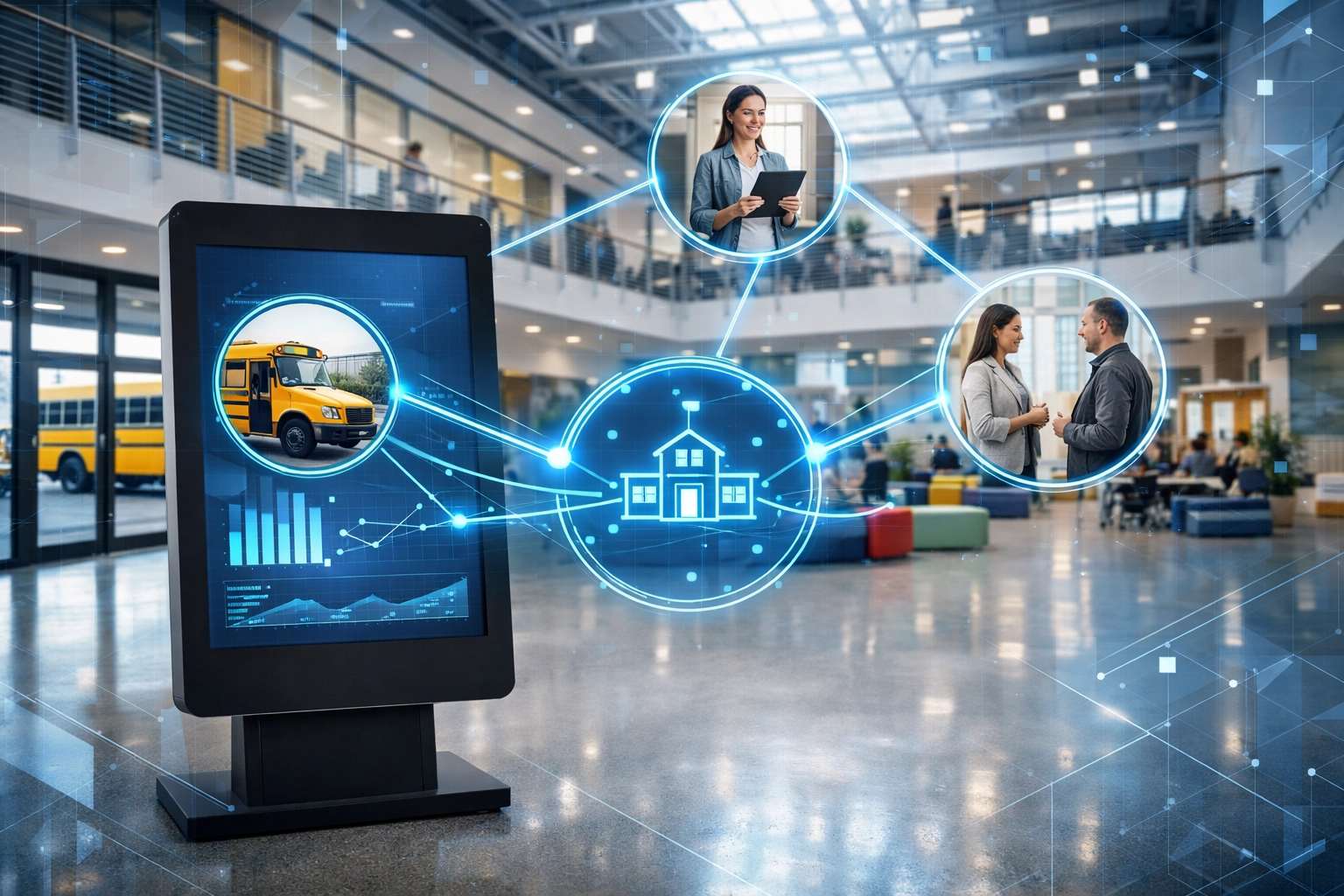
The schools that are thriving in 2026 are the ones that have embraced a unified education ERP. When your learning management system for schools is seamlessly integrated with your administrative ERP, magic happens. You get a "Single Source of Truth."
- When a student is marked absent in the morning, the system automatically notifies the teacher to adjust the day's group activity.
- When a student performs exceptionally in a science project, that data is instantly reflected in their 360-degree holistic report.
- When parents pay fees online, the finance department, the transport manager, and the parent’s app are all updated simultaneously.
This level of efficiency isn't just about saving paper; it's about saving time: the one resource every educator needs more of.
Moving Forward: Tips for School Administrators
If you’re looking to further the digital journey for your institution this year, here are a few "learning-first" tips to consider:
Practical checklist for schools evaluating digital transformation
- Prioritize Training over Tools: You can buy the most expensive software in the world, but if your teachers aren't comfortable using it, it will just be "shelf-ware." Invest in continuous professional development.
- Focus on Data Utility: Don't just collect data; use it. Ask your vendors how their reports can help you identify learning gaps or improve operational efficiency. Check out some modern services that focus on data visualization.
- Think Long-Term: Technology moves fast. Ensure your chosen platform is scalable and built on modern architecture (like cloud-native apps) so you don't have to replace it every three years.
- Involve the Parents: Digital transformation is a tripartite agreement between the school, the student, and the parent. Make sure your digital tools are user-friendly for parents who may not be tech-savvy.
- Assess integration carefully: An education ERP and a learning management system for schools deliver more value when they work together instead of operating in silos.
Final Thoughts
The year 2026 is an incredible time to be in education. We are witnessing a shift where technology is finally stepping back to let the student take the lead. By automating the mundane and highlighting the meaningful, digital transformation is giving us back the "human" element of teaching.
For school leaders, the bigger lesson is simple: digital progress works best when it supports both administration and learning. A thoughtful education ERP combined with a capable learning management system for schools can help institutions respond better to NEP 2020, improve visibility into student growth, and make everyday school processes easier to manage.
At Future Face Tech, we’ve always believed that the best technology is the kind that feels invisible because it works so well. Whether you are a small school or a large university, the goal remains the same: to create an environment where every child can reach their full potential.
Digital transformation isn't a destination: it's the journey we’re all on together. And honestly? It's looking like a pretty bright road ahead. 🚀
